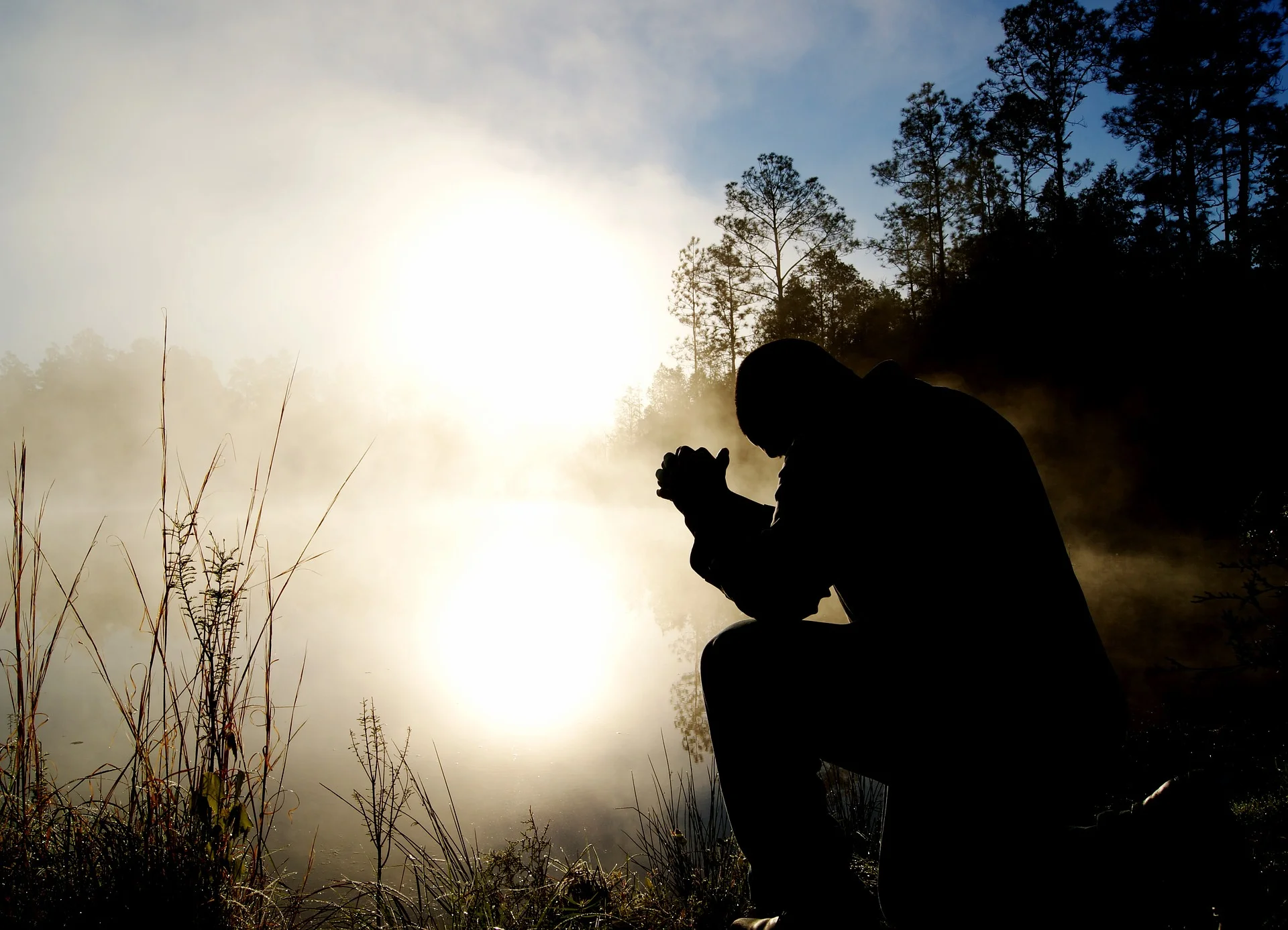
Prone to Wander, Lord I Feel It

finding-dan-dan-grinwis-O35rT6OytRo-unsplash.jpg

by Jason Park

“He must look on his heart as a magazine of gunpowder, and be cautious not to handle one spark of temptation more than he can help.” - J. C. Ryle. Thoughts for Young Men  

Ryle warns us to have a healthy dose of fear regarding the power of sin. Sin is always ready to explode in our lives. Yet, it’s so easy for our hearts to entertain sin and to dwell on it. As we’re cooped up more than ever before and have more idle time, our thoughts can easily wander from God. Our minds can easily fill up with fear, greed, lust, discontentment, and anger. 

Ask yourself: Where does my mind go when I don’t have to think about anything? What fills my imagination? What thoughts fill in the empty spaces? The answer to these questions reveals what we really worship. 

Maybe our current global emergency reveals a worship of control, security, freedom, comfort, or pleasure…maybe it reveals that I love the world more than I do the Father…that I put my hope and trust in this world and in this life…that I believe that something here will satisfy my soul.  

And to the degree that I love the world, I will lash out in anger, shrivel up with fear, seek after selfish pleasures, or crumble under the weight of unbearable boredom when things don’t go my way. In short, I will walk in sin. 

Thankfully, the Bible sheds light in our darkness. Psalm 119:11 tells us that as we treasure God’s word in our heart, we will not sin against Him. In Col 3:16, Paul calls us to let the word of Christ dwell in us richly. As we do so, praise and gratitude to God will flow out of us in loving others.  

The gospel received has power to melt our hearts with love for Christ and thus, uproot sinful affections. Putting on Christ in the word keeps us from giving into the lusts of the flesh which wage war against our souls (Rom 13:14). How can I let my mind dwell on the very sin that my Savior lovingly paid for with His precious life?  

So, it’s important to be proactive in fighting temptation and sin. And there’s no better way to do that than to consider Christ in all the glories of His lovely person and gracious work for us.  

Don’t let your mind just wander. Don’t give fuel to your sinful lusts. Instead, take ahold of yourself and preach to yourself the heart-protecting, joy-fueling word of Jesus Christ. 

The Lord’s Wisdom in Coronavirus

CDC-coronavirus-image-23311-for-web.jpg

by Jon Buck

Psalm 104:27 ~ O Lord, how many are your works! In wisdom You have made them all;
The earth is full of your possessions.

I often find myself thinking that something could have been done better. Whether it’s a sermon I’m writing, a DIY project at home, or a child’s essay, there’s always room for improvement. 

But that isn’t true about the works of God. Everything the Lord does is wise—infinitely, perfectly wise. There is never a moment when God realizes He should have gone with ‘plan B’. No, ALL of his ways have been done in perfect wisdom. 

COVID-19 and God’s Wisdom
In seasons like the one we’re in, we may find ourselves thinking that God’s sovereignty is limited by COVID-19. Perhaps this was an unexpected plan B?  But of course, that isn’t true. God is perfectly sovereign over every detail of this virus. Each case, each contact, each new infection…all of it, down to the the most minute biochemical event…is in God’s perfect hand.

And in each of those works, He is wise. 

Each of those interactions is a ‘work’ of His. And each event, with all its ramifications, is governed by His perfect hand. 

What’s the Point?
So, why did God allow this virus to start, and what is His purpose in every one of those events? The answer is not readily apparent. 

Rather than conjecture about the ‘WHY’ question, we need to look closer at God’s character. 

Though this circumstance may be incredibly difficult for the world, and for God’s people, He is still good in it! His works are always wise, and so they must be good. 

Our goal, then, must be to prayerfully seek His wisdom and goodness as we wait to see the outcome. 

Personal goodness
I can say personally that this event has been good for me! 

I am reminded of my mortality in a serious way. 
I am reminded of the scarcity that so much of the world lives with each day. 
I am reminded that I am so blessed to live in an age of technological ease. 
I am reminded to sit and play card games with the kids! 
I am reminded of God’s kindness to me in my wife.

And these are just a few! Let’s remember that God is wise, and during this time, see His wise hand in our lives, no matter what may come. 

Love Beyond All Measure

nick-fewings-ka7REB1AJl4-unsplash.jpg

by Jason Park

We see the world reeling in panic and confusion over the spread of the coronavirus. Governments are scrambling to stabilize their countries and infuse their people with hope and peace. And it’s necessary that they take practical measures to ensure the well-being of their people. 

But as believers, where do we find our stability in an age of anxiety? What is the source of our joy and peace today? Romans 15:13 says that our joy and peace come from the God of hope in believing Him and His word. And what specifically do we need to believe in as the world comes undone? We need to believe in the incomprehensibly marvelous love of Christ for us. 

In Eph 3:14-19, Paul lays out his prayer for the Ephesian believers. And the peak of his prayer is this: Jesus Christ loves us. He prays that all the saints together would know, through His Spirit in us by faith, “what is breadth and length and height and depth” of Christ’s love for us. He also prays that we would know “the love of Christ which surpasses knowledge.”  

Christ’s love for us is massive – it covers everyone, every situation, lasts forever, and fills us even when we sin. It knows no bounds. And Christ’s love is insearchable – we can know it by faith, we can grasp it to some degree, but even in that, we are face to face with the limitations of our finite minds. How can we begin to grasp the infinite love of God the Son dying for our sins against His infinite holiness? We run out of thoughts and words trying to wrap our minds around this truth. 

But it is true; it is the loveliest and most stabilizing truth of all. Jesus loves me. I know this because He died for me, He rose again for me, and I am permanently united with Him in all those realities. In fact, He is my life! (Col 3:4) 

When I believe this truth, it frees me from fear. How? If I know that Jesus is passionately loving me every moment of my life, whether I’m doing well or not, I don’t have to be concerned about myself anymore. He’s got me covered on all sides for all situations. And if die, I’ll be instantaneously transported into His presence where the vastness and unsearchableness of His love will engulf me in tidal waves of glory for all eternity. There is nothing like the love of Christ to stabilize us in times of anxiety. 

So, let’s keep considering that love in our minds; praying it until our hearts glow with affection for Christ; and sharing it with one another as it spills out of our hearts.      

Daily Dose of Faith

thought-catalog-kkysaOcVE94-unsplash.jpg

by Jon Buck

With all the talk of sickness and healthcare, we thought it would be good to begin offering daily doses of faith through our blog. 

Just as medicines should be taken daily to keep sickness under control, the sin of fear must be countered with consistent doses of faith. 

Challenge to believe 
But, of course, faith is a challenge. Looking out into the world, the fears of material shortage, of civil unrest, of personal injury, and of financial ruin can come flooding into our minds. What’s more, the ‘pestilence that stalks in the darkness’ (Pslm 91:6) can produce deep anxiety about our own end. 

So where does faith come from, and how can we get more of it?

Faith comes by…
The answer is made crystal clear in the pages of the New Testament. Faith comes by HEARING. 

Now, this should be fascinating to think about. When we hear things, we’ve been trained to not trust them. Whether biased media, unreliable sources, or the massive complexities of internet data, we instinctively know ‘Don’t believe everything you read!’

But when it comes to the Bible, God wants us to believe what we read! Unlike anything else, the Bible offers us truths from God Himself that are completely reliable. As we read or hear or meditate on those truths, they produce faith in us. This happens by the connection between the Holy Spirit that dwells in us, and the book that He authored. He leads us into believing what we hear. 

…Christ
So what should we seek to hear? We need to hear about Christ! …about His love, His sovereignty, His suffering, His wisdom, His plans for the world. We must hear these things if we are to increase in faith. 

So, our appeal to you during this season is to hear from God through His word. This blog will be updated daily to provide a ‘daily dose of faith’ from meditations on verses. But that’s just the start—keep your nose in the book, and your heart close to our Risen Savior! 

Thinking Biblically About Pandemics

free-to-use-sounds-1xT5Yz2Am0M-unsplash.jpg

by Jon Buck

As most readers are well aware, the world is recoiling under the weight of the coronavirus (COVID-19) epidemic. The World Health Organization is considering upgrading the virus to an official pandemic, depending on the efficacy of containment measures. 

The actual mortality and transmission rates of the virus remain unknown. However, it certainly is capable of taking life. What’s more, even if the coronavirus turns out to be a tempest in a teapot, the Bible promises future plagues (Rev. 6:8) that put this virus to shame. So the potential of death by sickness is very real. 

A quick walk through Costco will reveal how the world is dealing with this potentiality. Everywhere basic supplies are in massive demand. Rice, toilet paper, bottled water, and canned foods are sold out. Shoppers walk through the store with hollow eyes, listening for a dry cough from passersby. 

But how should Christians respond?

Life and Death are in God’s Hands

The first reminder that faith must embrace is that life and death are in the hands of God. The Bible tells us clearly that the days of our lives are numbered before even one of them existed. The future manner, date, and time of your death are already determined by God Himself.

Your eyes have seen my unformed substance; And in Your book were all written The days that were ordained for me, When as yet there was not one of them. (Psalm 139:16)

Simply put, you are absolutely invincible until God decides to take you home to be with Himself. At that moment, no amount of hand sanitizer, face masks, or stocked canned foods will protect you. 

John Paton, missionary to the cannibals in the New Hebrides, faced sickness and potential death frequently. Of his constant dangers he said, “Life in such circumstances led me to cling very near to the Lord Jesus; I knew not, for one brief hour, when or how attack might be made; and yet, with my trembling hand clasped in the hand once nailed on Calvary, and now swaying the scepter of the universe, calmness and peace and resignation abode in my soul.”

Preparedness is Good, Fear is Bad

Second, there is nothing wrong with being prepared for potential needs. Having an extra packet of toilet paper, a case of bottled water, or hand sanitizer are all wonderful ideas. 

However, there is a great danger in fear. When the dangers of this life lead Christians into anxiety and fear, joy and trust in Jesus declines. Paul commanded the Christians in Philippi to ‘be anxious for nothing’ (Phil 4:6-7) with the added statement that God’s peace would keep their hearts and minds ‘in Christ Jesus.’

When fear begins to take hold, and the ‘what if’s’ of the coronavirus (or any other malady) come to mind, the knowledge of God’s sovereignty and love must win the day. Where fear and anxiety take hold, true worship and communion are lost, joy evaporates, and God is no longer glorified. 

Preach the Gospel 

Finally, when fear grips a society, the Christian’s hope in Christ shines brightest. History testifies that godly believers have had great Gospel work during times of sickness. Whether Charles Spurgeon during the cholera outbreak in London, or Martin Luther during the black plague in Wittenberg, the Lord has empowered believers to walk in faith in the midst of fear. 

During these times, as the world walks through the valley of the shadow of death, Christians who have submitted their fears to Christ can speak boldly of hope in the Gospel. They can smile while the world lives in terror. They can love and serve when others flee. 

And in these moments, we must be ready to ‘make a defense to everyone who asks you to give an account for the hope’ that we have (1 Peter 3:15). What is the defense of our hope? 

That Jesus Christ is Lord of all, and that He is our loving Savior. To live is to serve Him, and to die is to be with Him—our greatest gain. 

Praying for you to walk in faith in Christ, and to love during this time of fear in the way that He loves us. My others see our good works, and glorify our Father in heaven.  

Dear Saint: Everything is Yours

nathan-dumlao-MrtzHLp4zVM-unsplash.jpg

by Jon Buck

“For all things belong to you, whether Paul or Apollos or Cephas or the world or life or death or things present or things to come; all things belong to you, and you belong to Christ; and Christ belongs to God.” ~ 1 Cor. 3:21-23

Throughout the first part of 1 Corinthians, Paul has been appealing to the church there to stop following after men, and to follow after Christ. His argument comes to a conclusion at the end of chapter 3. 

The conclusion to his argument is a remarkable statement about the importance of the saints. Paul says that all things (ALL things) belong to the people of God. What does this include? 

  • The Apostles, and all ministers/pastors belong to the saints (not the other way around!)

  • The created world belongs to the saints

  • Life and death belong to the saints 

  • All things that are coming in the future, for eternity, belong to the saints

Why? Why does everything belong to God’s people? 

The answer is that the saints belong to Christ, and Christ belongs to God. Christ has willingly submitted Himself to His Father, and in that sense, He belongs to God. And the saints, as those He ransomed with His own blood, belong to Him. 

For this reason, Christ, in His sovereignty, protects, loves, and provides for His people. In fact, in everything that happens in the lives of God’s people, Christ is working. 

So what’s the upshot of all this? Everything belongs to you BECAUSE you belong to Christ. You are not owned by your trials or by anything else. In fact, quite the opposite. 

  • Your pastors and leaders belong to YOU. We are your servants for Christ’s sake. 

  • Your trials and hardships belong to YOU. They are gifts given to you to conform you into His image. 

  • Your future belongs to you. Jesus is working everything together for His glory and your joy. 

  • Even death doesn’t own you—your death belongs to you because it is in the perfect sovereign hand of God, and will be for His glory. 

You belong to Jesus, and Jesus has given everything to you. For that reason, everything belongs to you. 

Abba! Father!

kelly-sikkema-FqqaJI9OxMI-unsplash.jpg

by Jason Park

Last night, as my son went to bed, he walked over to me with arms wide open for a hug. We embraced. He said, “I love you.” I said the same. And he went into his room.  

A few minutes before, we were in the living room. He was watching tv; I was on my laptop. We were father and son, a few feet from each other. But when we embraced and exchanged words of love, something happened. I didn’t become more of a father, and he didn’t become more of a son. I didn’t have less love for him before that embrace. Nor did he. But our love for one another was reaffirmed and felt in a more visceral way. 

Parental love is one of our most instinctual affections. Every parent feels it. As Jesus bluntly said, even evil fathers know how to give good gifts to their children (Luke 11:13). And a rebellious child all the more solidifies a parent’s love. That’s how strong it is.  

So how great and pure a love must God have for us, “sons of disobedience” (Eph 2:2), that He would save us from those same sins committed against Him! And in saving us, He not only justifies us, but He adopts us into His family. We become God’s very own children. 

God didn’t make us His children from afar. He did it personally, sacrificially. As Gal 3:4 says, He did it by sending forth His Son to take on human flesh, to fulfill the Law, and then to die on the cross for our sins. Christ’s life and death are the means by which we were adopted. That’s how great a love the Father has for us. 

But it doesn’t end there. He then sends forth into our hearts the Spirit of His Son, who continually cries out, “Abba! Father! (Gal 3:6). The Spirit continually reassures our hearts that we are children of God, infinitely loved and accepted in Christ. He enables us to taste and see the glories of what Christ achieved for us on the cross, our sonship.  

So, how do we get to place of feeling loved by our Father, of knowing the glories of our adoption in Christ – not just intellectually but experientially? We get there by believing what the Spirit is always already crying out in our hearts: God is our Father by the death of His Son. There is no greater love than that, and when I believe that, I will experience the Father embracing me in love, reassuring me that nothing will ever separate me from His love. 

The Lurking Monster of Self-Pity

christian-fregnan-W5Vf2fiDvss-unsplash.jpg

by Jon Buck

We’ve all been there. 

Some event happens, and we find ourselves thinking, “That’s just not FAIR!”

Maybe we got passed over for a promotion. 
Maybe we got mistreated in a relationship. 
Maybe we can’t afford what someone else can afford—a car, a vacation, etc. 

But, no matter what the event, the monster of self-pity is lurking in our hearts, always ready to pounce on us. 

And our inner monologue of thoughts begins to increase in volume. 

What’s Wrong with Self Pity? 

Sometimes life really is unfair. And we convince ourselves that we are justified in feeling these things. However, the problem with self-pity is that, at the root, it is simply grumbling. The difficult circumstance or relationship has caused us to grumble, and that grumbling is *always* directed at God. 

Grumbling, according to Paul, is sinful. He commands us to NOT grumble. And he also says that it is the human condition. He said in Phil. 2:14-15: 

Do all things without grumbling or complaining; so that you will prove yourselves to be blameless and innocent, children of God above reproach in the midst of a crooked and perverse generation, among whom you appear as lights in the world. 

Paul’s generation, just like ours, was marked by unremitting grumbling. For that reason, those who do not grumble appear like lights in the dark! 

So how do we stop grumbling when life really is unfair? 

Complaint and Faith

The bible lays out a very simple path to killing self pity. It centers around two simple truths - 

  1. God is sovereign. He could change your circumstance, but He isn’t. (Pslm 115:3, Prov. 21:1)

  2. God loves you! The situation you’re in is for your good! (Rom 8:28, 1 Peter 5:6-7)

We must believe these two truths FIRST. If we believe these, then we find ourselves with a question—what is God’s good purpose in this trial for my heart? 

And when we pray and ask Him to show us, we find that He really did have a good plan—to conform us into the image of His Son more and more. 

Before I was afflicted I went astray,
But now I keep Your word. ~ Psalm 119:67

How to Think About Suicide

elijah-hiett-wW0BUXTTUmU-unsplash.jpg

by Jon Buck

There have been a few high-profile suicides recently in the news, and particularly Jarrid Wilson, who was the pastor at Harvest Christian Fellowship in Riverside. Wilson took his own life on Monday after a long battle with depression. 

While many unbelievers have committed suicide, how should we think about those who profess Christ who commit suicide? 

Below are a few things to keep in mind. 

  1. Suicide is sin - While the Bible offers several stories about suicide (Saul, Ahithophel as examples), it does not ever speak specifically to the issue itself, unlike other sins like adultery, drunkenness, etc. Nevertheless, the Bible does speak about murder explicitly (Ex. 20:13, Rom. 13:9, etc.), and condemns it as sinful. The issue is the taking of life. This condemnation of murder can be understood to apply to the murder of another, or the murder of self. In this sense, suicide is sin.

  2. Can a true believer commit suicide? - The question is a good one - suicide is the final act of a person who is so in despair that life no longer has meaning or purpose. This point of despair is profound enough to drive that person to a deeply sinful act. However, despair can drive believers into other deeply sinful acts as well! To isolate suicide as an apparently unforgivable sin, or a sin that believers could never perpetrate, is to misunderstand the very nature of the power of remaining sin in a true saint. Paul saw that sin in his flesh and despaired even of life itself. (Rom. 7:25)

  3. Sins can be forgiven - Though suicide is, by its very definition, the last act of the victim, this sin can be forgiven. Just as a believer who dies with anger in his heart is not instantly condemned, so also someone who sins in this way as a true believer will not face condemnation (Rom. 8:1). For one who has truly trusted in the finished work of Christ on their behalf, neither past sins nor future sins hold out fear of condemnation.

While suicide is sinful, a true believer can reach such a place of despair as to even commit this type of sin. And yet, for those for whom Christ died, there is no condemnation. We can trust in God’s gracious gift of salvation to cover even that final act of sinfulness. 

However, this truth ought to help believers who are dealing with depression or suicidal thoughts. Jesus loves them and has died on the cross for all their sins. Even such selfish sins as suicide are covered by the blood of Christ. Believing that sort of unconditional love is the root of peace that passes understanding, and results in joy—not in life’s circumstances—but in the Lord alone (Phil. 4:6-7, 4). 

The hope for the despairing soul is Christ, and His sovereignty and love in every circumstance of life (Rom. 8:32). For those who have battled depression and found comfort in Him, albeit imperfectly, God has provided a special work of providing comfort to others. 

"Blessed be the God and Father of our Lord Jesus Christ, the Father of mercies and God of all comfort, who comforts us in all our affliction so that we will be able to comfort those who are in any affliction with the comfort with which we ourselves are comforted by God.” 2 Cor. 1:3-4

Of course this is not all there is to say about suicide. But if you or someone you know is struggling with depression or suicidal thoughts, you shouldn’t be embarrassed. Depression is a real part of life (just read Psalm 42-43 to see Biblical writers who struggled)! Instead, the best option is to reach out for help to someone who you trust who can care for them spiritually with the promises of Christ in the Gospel. 

Byproducts of Faith

prayer-1308663_1920.jpg

by Jon Buck

“…the life I now live in the flesh I live by faith in the Son of God, who loved me and gave Himself up for me.” - Gal. 2:20b

Paul was certain that the way to live his daily life as a believer was by faith. 

Of course, he knew he sinned. In fact, he goes so far as to boast in his weaknesses (2 Cor. 12:9). He knew that deep in his heart were the same roots of sin that had led him to be a blasphemer and violent aggressor (1 Tim. 1:15). 

So what did Paul do to overcome these dangerous things that he confessed were in his heart? Did he fight them by trying to NOT think or do them? Did he muster up strength to remain righteous? 

No - Paul says that he lived each day by faith. Faith was the root of the life and righteousness of Paul. 

When he was tempted to sin, he turned, not to human effort, but to faith. And the faith was specific - it was faith in the love of Jesus for him, and the death of Jesus for his sins. 

Paul lived by faith in the reality that in love, Jesus had died for all his sin! Why was this the key? Because it removed the temptation immediately. The love of Christ, and His death for Paul’s sins on the cross melted his heart and made him long for righteousness. 

Paul understood that all righteousness was a byproduct of that faith, and so his main goal was faith, first. From that place of faith, he knew the many many commands of the New Testament would not be ‘burdensome’, as John said (1 John 5:3). 

But without faith, Paul knew that he was going to sin (Rom. 14:23), just as the author of Hebrews knew that without faith, it is impossible to please God (11:6). 

For us, the great need when we are tempted to sin is not to try to tamp it down with human strength. Instead, we must confess that temptation to God - acknowledge our sinful motives or desires. From there, we discover that, in spite of our sin, Jesus loves us and has died for that very sin - that temptation, or lust, or bitterness. We’re already forgiven. 

Forgiven, and loved, we find strength and joy to turn from sin and live righteously — a byproduct of our faith. 

On Recent Apostasies

by Jon Buck

In the last couple of months, some Christian leaders have very openly abandoned the faith. 

Regardless of what these men have said, there are a few things that are important to remember when public figures stumble and fall. 

  1. They weren’t ever saved. 1 John 2:19 tells us that those who ‘go out’, do so because they were never truly believers in the first place. The Bible teaches that those who are truly Christ’s will persevere to the end (Phil. 1:6). No matter how apparently ‘godly’ these men appear, their apostasy proves they were faking it from the beginning.

  2. Faith is Bible-based, not man-based. The Gospel isn’t actually about Christian leaders at all. While men can have massive influences over our faith, they do not make up the faith. And all men, myself included, will struggle and fail in some areas. When a man leaves the faith, it is only saying something about the man—not the faith.

  3. Know Jesus. Regardless of who stands or falls, we must commit ourselves to knowing Jesus Christ through His word. When famous Christians stumble or fall away, it can shake our faith. The answer is deeper roots and stronger foundations in the truths of God’s word.

  4. Stay close to a biblical church. The Bible clearly teaches that one of the greatest purposes of the church is to protect its members. This isn’t just done by pastors, but by one another (Heb. 3:12-13) The more we draw close to one another, and encourage each other, the safer we will be!

  5. Questions must be shared. If you’re struggling with doubt or confusion, ask! One of the most dangerous things in the world is unexpressed doubts. Reach out, ask, and seek out care and shepherding through doubts. Of course everyone has doubts at times, but this is where reaching out provides safety as we think through the hard doctrines and issues facing the church.

John 10:27-28 - “My sheep hear My voice, and I know them, and they follow Me; and I give eternal life to them, and they will never perish; and no one will snatch them out of My hand.


Tough Theological Conundrums?

by Jon Buck

I recently heard a church historian say that the best theologians know when to quit pursuing answers to questions. They know when they come to a mystery, and need to just stop, drop to their knees, and worship the God who is above them. 

Undoubtedly there are a host of tricky theological questions. Issues like the intersection of human responsibility and God’s sovereignty, or the Trinity are just examples of the complexity. 

So how should we approach these sorts of difficulties? 

Here’s a list of things to keep in mind when you’re wrestling with tough theology:

1.     We are finite in our abilities to understand. There are things that no one understands, and we should rest in that reality. 

2.     None of us has read ALL the thoughts of Godly men in the history of the church. If you have a theological question that’s bugging you, odds are, someone smarter than you has already considered it. Seek out help to find resources that might help you with your pursuit of answers. 

3.    At the end of the day, our epistemological grounding is in the text of the Bible. We come to questions seeking answers, but when the Bible teaches certain things that we simply cannot reconcile, we need to settle our hearts in knowing that God is in control, and that His Word is true. 

4.    Difficult questions point us to the transcendence of God. If He is big enough to create the universe, there are many things that simply will not be understandable to us. That’s ok. 

Lastly, I’ve always been encouraged by the explanatory power of the Christian faith. No other worldview provides so much insight into human nature, the problem of evil, and the reason for the existence of the world. 

Like nothing else, Christianity offers deep answers to the ‘WHY’ questions of existence. It may not answer all the ‘HOW’ questions, but no other worldview even comes close! 

Keep digging, and when you’re stuck, stop and worship God through the simplicity of the Gospel! 

Jesus, Our Great High Priest

ben-white-vBd4Vy-laU8-unsplash.jpg

by Joel Giesbrecht

“Therefore, since we have a great high priest who has passed through the heavens, Jesus the Son of God, let us hold fast our confession. For we do not have a high priest who cannot sympathize with our weaknesses, but One who has been tempted in all things as we are, yet without sin. Therefore let us draw near with confidence to the throne of grace, so that we may receive mercy and find grace to help in time of need.” ~Hebrews 4:14-16

A truth that I know I need to meditate on more frequently is the reality of Jesus, the Son of God, as our Great High Priest. Though we find the mention of many high priests throughout Scripture, Hebrews 4:14 is the only mention of a "Great High Priest." What separates Jesus from every other high priest is that He experienced the weakness of human nature, without ever knowing the weakness of human depravity. He knew temptation. He became intimately acquainted with the frailty of flesh, even being tempted as we, too, are tempted. But, Jesus, God incarnate, never sinned. Though experiencing the tugs and pulls toward sin that we know all too well, He never gave in, He never faltered, He never capitulated, He remained sinless.

It is easy to think about the victory of Jesus and look straight to the final days of His life on earth. Jesus, the Lamb of God, was given as a perfect sacrifice for our sins, was buried and rose again in victory over sin and death on the third day. We also should remember each and every day which led up to that, when He was tried and tempted, and yet succeeded, allowing Him to be that sacrifice. If at any moment previous Jesus had failed, the cross would be worthless for our sin. Countless times Jesus triumphed in the face of temptation. He was “tempted as we are, yet without sin.”

What difference does this perspective on the Savior provide for the Christian, you may ask? Because Jesus took on flesh, He knows the struggles we face and can “sympathize with our weakness.” Jesus is not irritated when we are tempted. He is not frustrated that our hearts feel the tug of sin. Rather, He is ready and willing to give us help. He is ready to deal gently with us. And this ought to produce confidence in the Christian. Confidence to draw near to God’s throne of grace and find all the help we need in the face of temptation. Jesus, our Great High Priest, gives mercy and grace to help us in our time of need. In my prevailing weakness, I know I need to be reminded of my merciful high priest and the help which He offers. Maybe you do, as well.

A Word Fitly Spoken

ryan-jacobson-676162-unsplash.jpg

by Jon Buck

”A word fitly spoken is like apples of gold in a setting of silver.” ~ Prov. 25:11

This verse is, at first reading, a bit humorous. I have no idea what ‘apples of gold in settings of silver’ means. Perhaps some kind of really ornate and gaudy decoration (think Versailles). 

But one thing is clear—apples made of gold set into silver must have been pretty expensive. They would have been immensely valuable, and certainly rare. 

Solomon compares these decorative items to a word ‘fitly spoken’ (ESV). The word translated ‘fitly’ comes from a word for turning, and is from the same root as ‘wheel’. It describes the turning of a moment when the word will fit perfectly into the life and heart of a person. 

Why such value?

The value of a word in the right season is that it moves its hearer. Such a word is designed to bring the perfect help to a person in need—encouragement, admonishment, correction, praise, etc. And this is the value—the care of the soul of another. 

I was recently reminded about this value when a friend sent me an encouraging email. I wouldn’t have expected it—in fact it was on the heels of a difficult circumstance. But it was fitting, and kind, and the Lord used it with great value in my heart in trusting Him. 

As we walk in the Spirit, we often see needs around us. And many of those needs can be met with a simple word, fitly spoken. Whether encouragement, admonishment, or others, the words that come from a heart relying on Christ can build up those around us. 

And when it comes to words that build up, let me encourage you to point out those things that are spiritually encouraging to your brothers and sisters in Christ. It will be like apples of gold in settings of silver…whatever that means! 

Repentance or Penance?

naassom-azevedo-181804-unsplash.jpg

by Jon Buck

Repentance or Penance? 

What do we do when we know we’ve sinned? These two words appear nearly the same, but the chasm between them is infinite. 

The Bible teaches that repentance is a sorrow over and turning away from sin (2 Cor. 7:8-12).

Penance, however, is an act of self-inflicted punishment in order to restore relationship and favor with God. 

We know that the Bible commands all sinners everywhere to repent (Acts 17:30). True repentance provides peace and rest through believing that the sins we’ve committed have been forgiven. The Bible promises us that God always forgives us (1 John 1:9)! This is glorious news for people who are often caught in sin. 

Repenting more than once…

But sometimes, if you’re like me, you find yourself repenting for sins more than once. You might repent, but the feelings of guilt and shame over the sin remain, and so you try and try again to confirm that God forgives you. 

We may find ourselves hoping for certain emotional reactions that we would expect from being ‘truly repentant’. We may even do ‘spiritual’ things in order to restore God’s favor upon us. 

All of this self-effort and multiple ‘repentings’ are actually nothing of the sort. Instead, these things become a form of penance. We feel that we must do something in order to regain the favor of God. 

The danger of penance is that it always results in despair. If our efforts work, and we eventually find ourselves feeling closer to God, we are in danger of pride, since we ‘did it’ ourselves through our penance. That pride will lead to despair again, when we stumble again, and have to ‘climb back up’. 

And, if our penance doesn’t work, and if we don’t feel closer to God, eventually we will despair that God doesn’t love us. We will live in constant doubt and discouragement. 

So what’s the answer? 

Repentance and faith

Our problem is not that we don’t ‘feel’ enough repentance or that we need to do more. Our problem is that we don’t truly believe in the forgiveness we receive from God. Repentance is ultimately an act of faith.

When we come to God in repentance for a sin, we must believe that Jesus died on the cross for that sin so that there is no condemnation for us from God. He is not angry. He does not condemn us. All our sins are forgiven through the power of the shed blood of Christ. 

When we believe this promise, our hearts are set free from despair and guilt. We no longer try to punish ourselves enough to regain God’s favor, since we already have it in full through Christ. How joyful to know that my sins are forgiven! (1 John 2:12)

And, remarkably, in believing this good news of the forgiveness and grace of God, we find new power to turn from sin. The joy of the Lord becomes our strength (Neh. 8:10). We hate to think of causing grief to such a kind Savior and merciful Father. We despise anything that would come between us and our loving Father. 

So…when you find yourself repenting over and over again, reject that notion. Go to the Bible, find again that Jesus died for your sins, and believe that reality. Let the full forgiveness of God wash over your soul, and rejoice in His finished work for you!

Living by Faith

ben-white-161594-unsplash.jpg

by Jason Park

On a day to day, moment by moment basis, how do we live our Christian lives?

To be honest, I often fall into living by my willpower and good works. I can easily gut out my obedience and then look at what I’ve done with pride. I think I’m strong.

Now, of course willpower and good works are not bad. In their proper place, they are all wonderful gifts that God gives to His children. But, if we live our Christian lives based on either one by itself, we are doomed to fail from the start. 

Why? Because willpower and good works come by faith. In fact, everything that I need to live the Christian life springs from faith. So, if I try to do it all in my own strength, I eventually crash and burn. This is why faith is so crucial.

Consider how the Bible unpacks the wonders of faith:

-       Faith is how the Christian life begins (Eph 2:8). 

-       Faith is how we see unseen, eternal realities, the primary reality being Christ Himself (2 Cor 3:18; 4:6). 

-       And when we see Him by faith, we immediately love Him and rejoice with joy inexpressible and full of glory (1 Pet 1:8). 

-       Our faith also works itself out through love, in the heart and in our deeds (Gal 5:6). 

-       All of our obedience springs from faith in Christ (Rom 1:5; Rom 16:26).

-       So, the whole Christian life is summarized by this: we walk by faith, not by sight (2 Cor 5:7). 

It’s not that faith itself is powerful. Rather, faith is the means by which we access power; the power of Jesus Christ in the gospel. And, to do this, we admit our total weakness to live the Christian life apart from Him and trust that what the gospel says about Him and His work is true. 

And when we believe in Christ, He gives us power to obey from the heart all that He’s called us to. This is why Jesus said that apart from Him we can do nothing (John 15:5). But, with Christ, by faith, we can bear much fruit to His glory.

Revelation 2:4

emran-yousof-1279139-unsplash.jpg

by Gus Pidal

‘But I have this against you, that you have left your first love. 

The first time I visited Edinburgh, I was astonished by the history of that city. From castles to churches, I was amazed by it all. However, what struck me in my conversations with the residents of that city was how they had become so accustomed to the sights and history that surrounded them, that no one stopped to ponder the beauty that surrounded where they were living. 

In Revelation 2:4, the apostle John is writing a letter to seven churches, the first of which was in Ephesus. This was a church that had a great pedigree; good founders and theology. Yet there was a problem; they had abandoned their first love. 

Sadly, that love was a person. The person of our Lord Jesus Christ. This church was rich, it had a great heritage, but it was missing one thing, the most important thing: love for Christ. They had forgotten Christ and what he did for them on the cross. 

As we train men at the Berea Seminary, we too can be like the church in Ephesus. Even though we should be thankful for our orthodoxy, it must never become dead. We do not worship books, nor doctrines; we worship a person, the God made flesh, the one who ransomed us from the dead, Jesus Christ. 

Examine and ask yourself, am I loving Christ the same way I did when I was first saved? Perhaps you are failing at this, but the antidote for this is simple: repent and believe by remembering who we were before we were saved, and letting our love for Christ be borne out of an appreciation for what he has done for us on the cross

Praying to the Father

dawn-1868418_1920.jpg

by Jason Park

One of the beauties of the gospel is that we know God and His Son Jesus Christ. In fact, that is Christ’s definition of “eternal life” (John 17:3). 

What’s more, we now know God in Jesus Christ through the Holy Spirit. If we have trusted in Jesus Christ for the forgiveness of our sins, then we’re united with Christ, indwelt by His Spirit, and adopted into His family as children of God (Rom 8:16-17). 

This isn’t just some theological notion. God truly is our Father. Think about these gospel-facts. He has born us again by the word of truth, the gospel of Christ (James 1:18). He has placed His Spirit in us, the Spirit of adoption that cries out “Abba! Father!” (Rom 8:15). 

So now we have access to God. Even more, we have boldness and confident access to our Father through faith in Christ (Eph 3:12). And by faith, we can cry to our Father for mercy and grace in our time of need (Heb 4:16). For any need, at any time, in any place. Just as your child can barge into your bedroom at 2am asking for a cup of water or reassurance that there’s nothing to be afraid of in the dark, you can go to your Heavenly Abba for what you need.

And in our neediness, our Father meets us with His love. He loves giving good gifts to His children, gifts perfectly crafted for the person and the need (James 1:17). And best of all, even if we don’t get the request we prayed for, we get Him, our Father rich in mercy and love, who delights over His children. 

Doesn’t that make prayer all the more necessary and wonderful?

Getting at the Root

gardening-2518377_1920.jpg

by Jon Buck

I’m not a good gardener. Our yard is awash in weeds, and, in spite of my efforts, they continue to proliferate. 

But, in my limited garden experience, weed-pulling requires root removal. Unless you pull out the whole root of the weed, it will continue to grow. It may spring up in a different location, but it will always spring up. 

This is true of sin. Unless we seek out and find the root of our sins, we cannot ever hope to change. Fighting sin is a root battle, and wisdom is needed to find the root. 

Remarkably, in Romans 1:18-32, Paul makes it clear that the root of sin (read the list in vv. 29-31 - LOTS of sins!) is found in how each person views God. 

For Christians, we no longer reject God, or suppress the truth about God, and yet, our view of God can often be anemic. We forget He is sovereign. We forget He loves us, and has proven this at the cross. In our forgetfulness, we turn to other things for security, fulfillment, joy, and power to root out sins. 

For those who don’t know God, Paul says that the root of their sin is their view of God. They have suppressed the truth of God in unrighteousness, and from this root spring all the evils of their lives. 

We need to remember this. When you meet an unbeliever, no matter how heinous his or her sin life might be, remember, you’re seeing the weed. The problem is the root. Like good spiritual gardeners, we must learn to look past the weeds, and seek to point to the root of sin. 

How? 

Through the Gospel. Only in the Gospel does God reveal Himself to the heart of man (2 Cor. 4:4-6). So…proclaim the Gospel. Speak about Christ and His death for sinners. God alone has the power to pull sin by the root through the glory of His Son! 

…but why?

ken-treloar-346065-unsplash.jpg

by Jon Buck

Welcome to the FBC blog! This is the first post of hopefully many to come. But the blog itself begs the question—why blog in the first place? There are several answers, both positively and negatively.

First, we are NOT blogging for anyone except our church. The purpose of the blog is to better serve the people of FBC, in their walk with Christ. That’s the main goal, rather than trying to seek out readers that are outside of our church. 

Second, our goal is to serve you in small increments. While there are many resources available at our church already (first hour, main service, care groups, other equipping classes, etc.), there are topics that don’t often get covered in those venues. Many of those topics can be covered in a relatively short post. In that way, we hope the blog will be helpful. 

Third, our desire is to allow others who are not commonly with us to also share with our church family. For example, our missionaries (Matt, Peter, Gus, Raffaele) can share stories, prayer requests, and encouraging updates in a simple format, as well as their own meditations on Scripture. Also, we can provide suggested resources like books, links, sermons, etc., without flooding your inbox. 

Ultimately, our desire for this blog is to better serve you as our church family. 

With that in mind, if there’s a question you have or a topic that might be helpful to hear about, feel free to email me at jbbuckmine@gmail.com, and we’ll work on getting it answered. 

Thanks in advance for your time.